Tooth nerve pain comes from the pulp, the soft core of the tooth that holds its nerve and blood supply. When decay, a crack, an injury or gum disease irritates or infects the pulp, it can cause sharp, throbbing or shooting pain that lingers after hot or cold, worsens when you bite and may spread to the jaw, ear or head. Lasting relief comes from treating the cause, often with a filling or crown for mild irritation and a root canal or extraction when the nerve is badly inflamed or infected.
Nerve-related tooth pain is one of the most intense kinds of dental discomfort, and it often arrives suddenly. Because the tooth nerve connects to surrounding tissues, the pain can be hard to pin to one tooth. This guide explains what tooth nerve pain is, its common causes, the symptoms to watch for, what an inflamed nerve means and the treatments that provide long-term relief. Walk-In Dental Clinic in Katy sees patients with tooth nerve pain from Katy, Cypress, Fulshear and Greater Houston the same day, 7 days a week.
- Tooth nerve pain starts in the pulp, which holds the nerve, blood vessels and connective tissue.
- Pain that lingers after hot or cold, wakes you at night or throbs on its own points to nerve inflammation.
- Mild, reversible inflammation can settle once the cause is fixed; irreversible inflammation needs a root canal or extraction.
- Decay, cracks, trauma, gum disease and repeated dental work on one tooth are common causes.
- Home care helps short term only; the cause needs professional treatment.
What is tooth nerve pain?
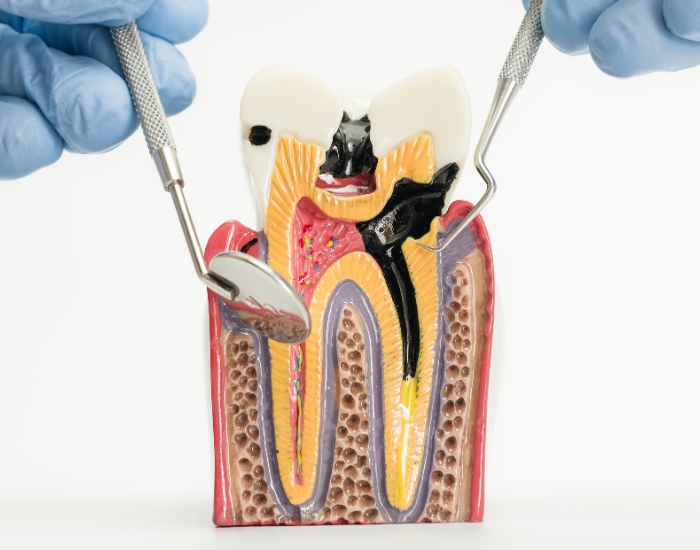
Tooth nerve pain is discomfort that starts in the dental pulp, the living tissue in the center of a tooth that contains nerves, blood vessels and connective tissue. When the pulp is irritated, inflamed or infected, it sends strong pain signals to the brain.
The pain can range from mild, brief sensitivity to severe, constant pain that affects eating, sleep and work. Because the pulp sits inside hard walls of dentin and enamel, it cannot expand when it becomes inflamed, so pressure builds quickly and the pain can feel out of proportion to what you see. Tooth nerve pain is usually a sign that a tooth is damaged or infected and needs professional dental care.
What causes tooth nerve pain?
The most common causes of tooth nerve pain are deep cavities, cracked or broken teeth, dental trauma, advanced gum disease and repeated dental procedures on the same tooth. Each one gives bacteria or irritation a path to the pulp.
- Tooth decay and cavities: when a cavity reaches the inner layers, bacteria irritate the nerve and cause pain and sensitivity.
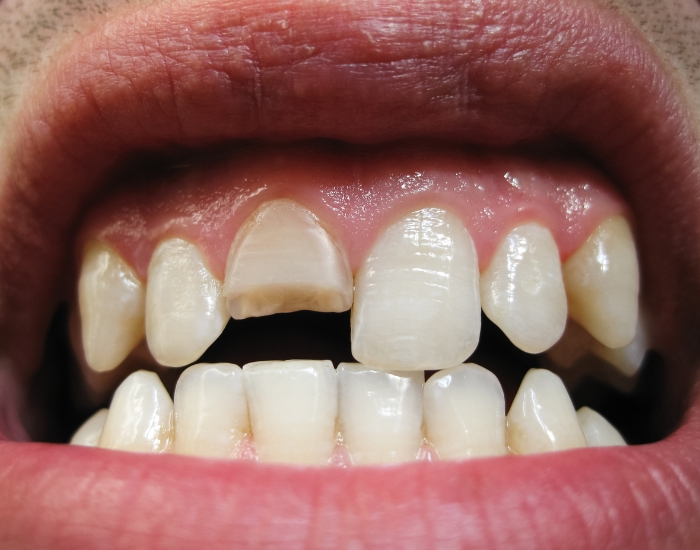
- Cracked or broken teeth: a crack can expose or inflame the nerve, causing sharp pain, especially when chewing.
- Dental trauma: a blow to the mouth can damage the nerve even if the tooth looks normal.
- Gum disease: advanced gum disease and recession expose root surfaces that lead directly toward the nerve.
- Repeated dental procedures: several large fillings or treatments on one tooth can irritate the pulp over time.
- Grinding and clenching: constant heavy force can inflame the nerve and cause small cracks.
When the protective layers are lost and the nerve is close to the surface, read our article on an exposed tooth nerve. If the pain is mainly sharp when you bite, see our guide to cracked tooth pain.
What are the symptoms of tooth nerve pain?
The key symptoms of tooth nerve pain are sharp or throbbing pain in one tooth, sensitivity to hot or cold that lingers after the food or drink is gone, pain when biting, tenderness or swelling around the tooth and pain that wakes you at night. Recognizing these signs early can prevent more serious damage.
- Sharp, throbbing or shooting pain in one tooth
- Sensitivity to hot or cold foods and drinks
- Pain that lasts long after the hot or cold is removed
- Pain that worsens when biting or chewing
- Swelling or tenderness of the gum around the tooth
- Pain that spreads to the jaw, ear or temple
- Pain that wakes you up at night
- A tooth that has darkened in color
The difference between ordinary sensitivity and nerve pain often comes down to timing. A quick twinge that fades in a few seconds is usually sensitivity; our article on why teeth become sensitive covers that. Pain that lingers for a minute or more, or that starts on its own, suggests the nerve itself is inflamed.
What does an inflamed tooth nerve mean?
An inflamed tooth nerve, called pulpitis, means the pulp is irritated by decay, infection or injury. In the early, reversible stage, the nerve can recover once the cause is treated. In the irreversible stage, the nerve cannot heal and needs a root canal or extraction.
Because inflammation can progress, a tooth that starts with reversible symptoms can move to the irreversible stage if the cause is left alone. That is why getting a sensitive or painful tooth checked early often means simpler treatment.
| Reversible pulpitis | Irreversible pulpitis | |
|---|---|---|
| Pain pattern | Brief, sharp pain with a trigger that fades quickly | Lingering, throbbing or spontaneous pain |
| Night pain | Uncommon | Common; may wake you |
| Can the nerve recover? | Yes, once the cause is removed | No |
| Typical treatment | Filling, crown or protective restoration | Root canal or extraction |
Sharp or lingering tooth pain?
Walk-In Dental Clinic in Katy can test the nerve, find the cause and often start treatment the same day, 7 days a week.
Why does sharp tooth nerve pain happen suddenly?
Sharp tooth nerve pain usually happens suddenly when the nerve becomes exposed or severely irritated, often from deep decay breaking through, a crack opening up or an infection reaching the pulp. The pain can be intense, especially with hot or cold food and drinks.
Sometimes the problem has been building for months without symptoms, and then a final layer of dentin breaks down or a crack spreads, and the nerve reacts all at once. Sudden sharp nerve pain is a warning sign that the tooth needs prompt attention before the damage spreads further. If the pain is overwhelming, our guide to severe tooth pain explains your options for quick care.
How is tooth nerve damage treated?
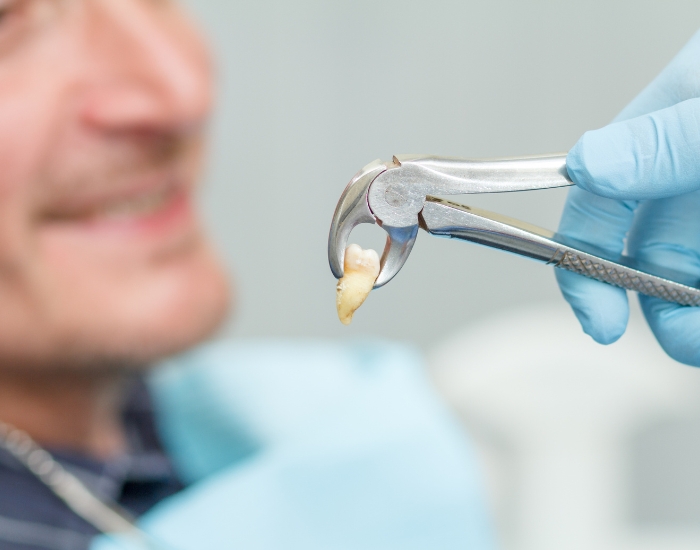
Tooth nerve damage is treated according to how badly the nerve is affected: a filling or crown can protect a mildly irritated nerve, a root canal removes a severely inflamed or infected nerve and saves the tooth, and extraction is used when the tooth cannot be saved.
- 1. Filling or crown: when irritation comes from a cavity or minor damage, a filling or crown seals and protects the tooth so the nerve can settle.
- 2. Root canal treatment: when the nerve is severely inflamed or infected, root canal treatment removes the nerve tissue, disinfects the canals and seals the tooth.
- 3. Crown after root canal: back teeth in particular usually need a crown to protect them from cracking.
- 4. Extraction: if the tooth is badly damaged or cannot be restored, removing it ends the pain, and replacement with a dental implant or bridge can be discussed.
Modern root canal treatment is done with local anesthesia and feels similar to getting a filling for most people. The goal is to relieve pain and keep your natural tooth whenever that is a good option. We explain the options and the cost before treatment begins.
How can I manage tooth nerve pain at home?
You can manage tooth nerve pain at home for a short time by rinsing with warm salt water, using a cold compress on the cheek, avoiding very hot or cold foods and taking an over-the-counter pain reliever as directed. Home care is only temporary and should be followed by a dental visit.
- Rinse gently with warm salt water to soothe the area.
- Apply a cold compress to the cheek to reduce swelling and numb the pain.
- Avoid very hot and very cold foods and drinks, which trigger sharp nerve pain.
- Use a desensitizing toothpaste if sensitivity is mild.
- Take pain relievers only as the label directs.
- Keep brushing and flossing gently to keep the area clean.
When should I see a dentist for tooth nerve pain?
See a dentist promptly if tooth nerve pain lasts more than a day or two, lingers after hot or cold, wakes you at night, comes with swelling or a bad taste or follows an injury. These signs suggest the nerve is inflamed or infected and may need more than a simple filling.
For severe pain without those red flags, Walk-In Dental Clinic offers same-day dental care in Katy. Call ahead and we can triage your symptoms by phone.
How can I prevent tooth nerve pain?
You can prevent most tooth nerve pain by stopping decay early, protecting teeth from cracks and injuries and keeping your gums healthy.
- Brush twice daily with fluoride toothpaste and floss daily.
- Limit sugary foods and drinks that feed decay.
- Keep regular cleanings and checkups so problems are found early.
- Wear a mouthguard if you grind your teeth or play sports.
- Avoid chewing ice, hard candy and other very hard objects.
Same-Day Care Near Katy, Cypress & Fulshear
Walk-In Dental Clinic is located at 20919 Kingsland Blvd, Katy, TX 77450, just off I-10 with easy access from the Grand Parkway. We are open 7 days a week, including evenings, Saturdays and Sundays, and see same-day patients from Katy, Cinco Ranch, Fulshear, Cypress, Richmond, Sugar Land and the rest of Greater Houston. Call ahead and we can assess your symptoms by phone and be ready when you arrive.
Same-day dental care, 7 days a week
Tell us what is happening and we will get you in as soon as possible.
Frequently Asked Questions
What causes tooth nerve pain after a filling?
Some sensitivity after a filling is common because the nerve was irritated during treatment or by deep decay near it. A filling that sits slightly high can also cause pain when biting. If pain lingers, worsens or throbs, tell your dentist so the bite or nerve can be checked.
What are the common symptoms of tooth nerve pain?
Common symptoms include sharp or throbbing pain, sensitivity to hot or cold that lingers, pain when biting and pain that wakes you at night. Swelling or a darkened tooth can also be signs. A dental exam confirms whether the nerve is involved.
Can an inflamed tooth nerve heal on its own?
A mildly inflamed nerve can recover if the cause, such as a cavity, is treated early. If inflammation continues or becomes irreversible, the nerve will not heal and usually needs a root canal or extraction.
What is the best treatment for tooth nerve damage?
The best treatment depends on severity. A filling or crown can protect a mildly irritated nerve, while a root canal treats a severely inflamed or infected one. Extraction is used when the tooth cannot be saved.
Why does sharp tooth nerve pain happen suddenly?
Sudden sharp pain often means the nerve has just become exposed or infected because of deep decay, a crack or trauma. The problem may have been developing quietly for some time. It should be checked promptly.
Is a root canal painful?
Root canal treatment is done with local anesthesia, and most people say it feels similar to a filling. It is meant to relieve the pain of an inflamed or infected nerve. Some tenderness for a few days afterward is normal.
Can I get same-day treatment for tooth nerve pain near Katy?
Yes. Walk-In Dental Clinic at 20919 Kingsland Blvd in Katy sees same-day and walk-in patients 7 days a week, including patients from Cypress and Fulshear. Call (713) 999-5328 before you come.
Final Thoughts
Tooth nerve pain is a serious issue that should not be ignored. It usually means the nerve is inflamed or damaged, and while home care can ease symptoms, only treating the cause brings long-term relief and protects the tooth. If you have tooth nerve pain or severe sensitivity, call Walk-In Dental Clinic at (713) 999-5328 or walk in to our Katy office, open 7 days a week.
Further reading
- American Dental Association patient resource: MouthHealthy.org
- U.S. National Library of Medicine: MedlinePlus, Tooth Disorders
Medical disclaimer: This content is for informational purposes only and does not constitute medical or dental advice. Always consult a licensed dental professional about your own symptoms. In a medical emergency, call 911.