
A cracked tooth that is causing pain should be seen by a dentist promptly, usually the same day if the pain is sharp, constant or comes with swelling, because cracks can deepen into the nerve and lead to infection or tooth loss. Walk-In Dental Clinic at 20919 Kingsland Blvd in Katy treats cracked teeth on a same-day and walk-in basis, 7 days a week, for patients from Katy, Cypress, Fulshear and Greater Houston.
Cracked teeth can sneak up on you. One moment your bite feels normal, and the next you are wincing every time you chew. If you are dealing with a cracked tooth causing pain, do not ignore it. Cracks can spread, let bacteria in and eventually split the tooth. Fortunately, emergency dentists handle these situations every day. This guide explains what causes cracked teeth, how to spot one, what to do before you are seen, the treatment options and when it is time to get emergency care.
- A cracked tooth causing pain is a reason to see a dentist promptly.
- Sharp pain when biting, or when releasing a bite, is a classic sign of a crack.
- Cracks can be invisible, so X-rays and a careful exam are needed.
- Treatment ranges from bonding and crowns to root canals; extraction is a last resort.
- Never put aspirin directly on the gum, and get help fast if swelling appears.
Is a Cracked Tooth a Dental Emergency?
Yes, a cracked tooth is a dental emergency when it causes pain, sensitivity, swelling or visible damage. Unlike a minor chip, a crack can run deep into the tooth and reach the nerve or the root.
If it is ignored, a crack can worsen and lead to infection, an abscess or the loss of the tooth. A cracked tooth causing pain is a clear sign to see an emergency dentist as soon as possible. The earlier a crack is treated, the more likely the tooth can be saved with a simpler repair.
What Are the Common Causes of Cracked Teeth?
Teeth usually crack from biting something hard, grinding or clenching, a blow to the face, large fillings that weaken the tooth, or years of everyday wear. Cracked molars are especially common because they take the most chewing force.
- Biting hard objects such as ice, bones, hard candy or popcorn kernels
- Teeth grinding or clenching (bruxism)
- Sudden temperature changes, like ice water right after hot food
- Facial trauma or sports injuries
- Large fillings that leave thin tooth walls
- Age-related wear and tear
Teeth that have had a root canal without a crown are also more likely to crack, because they can become more brittle over time.
What Types of Tooth Cracks Are There?
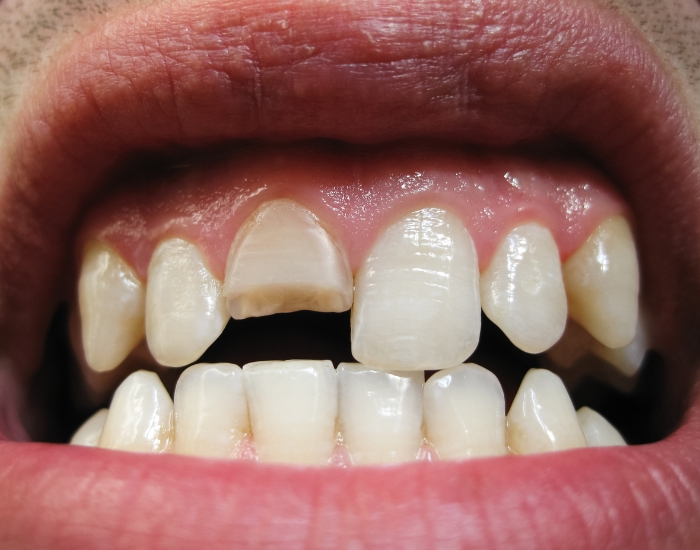
Tooth cracks range from harmless surface lines to splits that run down into the root. The type of crack determines how urgent it is and how it is treated.
Only an exam and X-ray can tell which type you have. Read more about cracked tooth pain and what it feels like.
| Type of crack | What it means | Typical treatment |
|---|---|---|
| Craze lines | Tiny surface lines in the enamel, usually painless | Often no treatment needed |
| Fractured cusp | A piece of the chewing surface breaks, often around a filling | Filling or crown |
| Cracked tooth | A crack from the chewing surface toward the root | Crown, sometimes a root canal |
| Split tooth | The crack has separated the tooth into parts | Sometimes part can be saved; often extraction |
| Vertical root fracture | A crack that starts in the root | Usually extraction |
What Are the Symptoms of a Painful Cracked Tooth?
The most common symptom is sharp pain when you bite down or release a bite, along with sensitivity to hot, cold or sweet foods and pain that comes and goes. Many cracks are not visible to the eye.
- Sharp pain when biting or chewing
- Pain that increases when you release pressure after a bite
- Sensitivity to hot, cold or sweet foods
- Intermittent pain that comes and goes
- Swelling of the gum around the affected tooth
- A rough edge you can feel with your tongue
If chewing is the main trigger, see our guide to tooth pain when chewing. If these symptoms sound familiar, you are likely dealing with a cracked tooth that needs attention.
Why Are Cracked Teeth Sometimes Hard to Find?
Cracked teeth can be hard to find because many cracks are too fine to see and often do not show up clearly on X-rays. Pain may also come and go, or feel like it is coming from a different tooth.
To locate a crack, the dentist may combine several methods: asking exactly when the pain happens, having you bite on a special tool one cusp at a time, shining a bright light through the tooth, checking for gum pockets next to the tooth and looking closely with magnification. Sometimes an old filling needs to be removed to see a crack underneath. Because the pain can be intermittent, it helps to notice which foods or movements trigger it and tell the dentist. If you have had pain on biting for a while but nothing has been found yet, mention it. Repeated sharp pain on release of a bite is one of the most reliable clues.
Cracked tooth hurting?
Call (713) 999-5328. We see same-day patients in Katy 7 days a week and can often stabilize a cracked tooth the same visit.
What Should You Do Before Seeing a Dentist?
Rinse with warm salt water, avoid chewing on that side, use a cold compress on the cheek if there is swelling and take over-the-counter pain relievers as directed. Then get to a dentist as soon as possible.
- 1. Rinse with warm salt water to clean the area.
- 2. Avoid chewing on the affected side of your mouth.
- 3. Apply a cold compress to the outside of the cheek if swelling occurs.
- 4. Use over-the-counter pain relievers as directed.
- 5. Cover a sharp edge with dental wax or sugar-free gum to protect your tongue and cheek.
- 6. Call or walk in to an emergency dental clinic as soon as you can.
What Are the Treatment Options for a Cracked Tooth?
Treatment depends on how deep and where the crack is. Options range from bonding for minor cracks to crowns, root canals and, rarely, extraction for teeth that cannot be saved.
- Dental bonding: for minor surface cracks, tooth-colored resin seals and protects the tooth.
- Dental crown: a cap that covers the tooth to hold it together and restore strength.
- Root canal therapy: needed when the crack reaches the pulp and causes inflammation or infection.
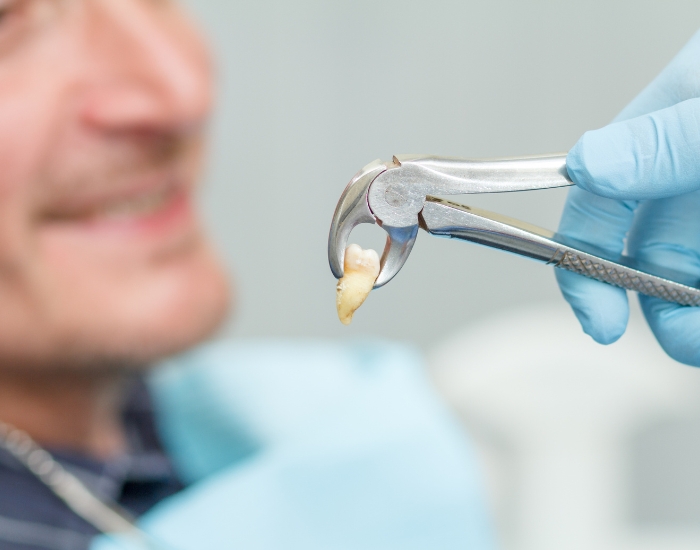
- Tooth extraction: for severely cracked or split teeth that cannot be saved.
Learn more about chipped and cracked tooth repair, metal-free crowns and root canal treatment. Your dentist will recommend the best option after examining the crack and taking X-rays.
Why Should You Not Wait to Treat a Cracked Tooth?
Cracks do not heal on their own, and chewing pressure tends to make them longer. Waiting can turn a tooth that could be saved with a crown into one that needs a root canal or extraction.
- Worsening pain
- Infection or abscess
- Permanent nerve damage
- The crack spreading until the tooth splits
- More costly and invasive treatment later
The sooner you get help for a painful cracked tooth, the better the outcome usually is.
What Should You Expect at Walk-In Dental Clinic?
When you come in with a cracked tooth causing pain, we evaluate it promptly with on-site digital X-rays, stabilize the tooth and relieve discomfort, often the same visit. No appointment is needed.
- 1. Call ahead at (713) 999-5328 so we can triage by phone and be ready.
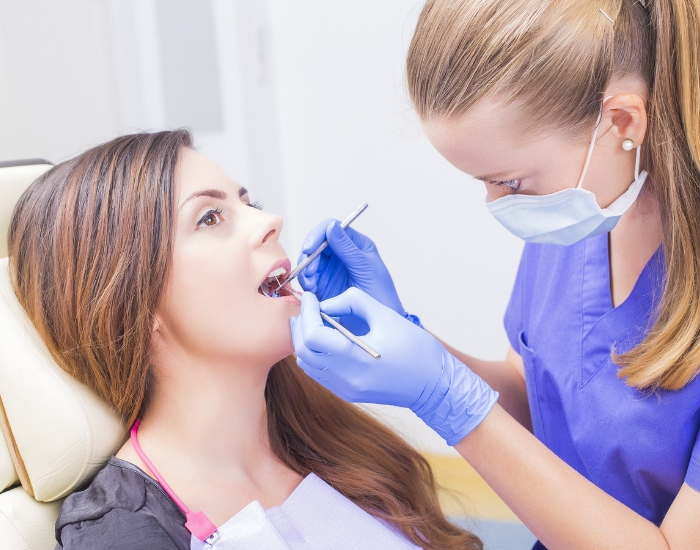
- 2. Exam, bite testing and digital X-rays to locate the crack.
- 3. A clear explanation of the options and the cost before treatment.
- 4. Same-day care such as bonding, a temporary crown or starting a root canal.
- 5. A plan for any final crown or follow-up treatment.
We provide caring treatment in a calm, judgment-free setting. We accept most dental insurance on an indemnity basis, plus cash, debit and major credit cards, and offer discounts and payment plans for patients without insurance.
What If the Cracked Tooth Breaks Apart?
If a piece of the tooth breaks off, save it, rinse your mouth, cover sharp edges and see a dentist the same day. A broken tooth exposes more of the inside and is more likely to become painful or infected.
Bring any broken piece with you in a small container of milk or water. Avoid chewing on that side. In many cases the tooth can still be restored with a crown, though teeth split down to the root may need to be removed with a simple extraction or surgical extraction. See our broken tooth emergency dentist page for more.
How Can You Prevent Future Tooth Cracks?
Avoid chewing very hard things, wear a mouthguard for sports and a night guard if you grind, do not use your teeth as tools and keep regular checkups. Simple, consistent care goes a long way.
- Avoid chewing ice, hard candy and popcorn kernels.
- Wear a custom mouthguard for contact sports.
- Wear a night guard if you grind or clench at night.
- Do not open bottles, tear packaging or bite non-food items.
- Brush twice daily with fluoride toothpaste and floss daily.
- Keep regular checkups so your dentist can spot wear and small cracks early.
When Should You Visit an Emergency Dentist for a Cracked Tooth?
Visit an emergency dentist right away if you have sharp, localized pain when chewing or releasing a bite, a loose or unstable tooth, a visible fracture, or swelling around the gumline. These signs mean the crack may have reached sensitive areas.
- Sharp pain when chewing or releasing bite pressure
- A loose or unstable tooth
- A visible fracture or missing piece
- Swelling around the gumline
- Pain that wakes you up or lasts after eating
Same-Day Care Near Katy, Cypress & Fulshear
Walk-In Dental Clinic is located at 20919 Kingsland Blvd, Katy, TX 77450, just off I-10 with easy access from the Grand Parkway. We are open 7 days a week, including evenings, Saturdays and Sundays, and see same-day patients from Katy, Cinco Ranch, Fulshear, Cypress, Richmond, Sugar Land and the rest of Greater Houston. Call ahead and we can assess your symptoms by phone and be ready when you arrive.
Same-day dental care, 7 days a week
Tell us what is happening and we will get you in as soon as possible.
Frequently Asked Questions
Is a cracked tooth causing pain an emergency?
Yes, a painful cracked tooth should be seen promptly, ideally the same day if the pain is sharp or constant. Early treatment gives the best chance of saving the tooth.
Can a cracked tooth heal on its own?
No. Unlike bone, teeth cannot repair cracks. A crack usually grows over time, so it needs bonding, a crown or other treatment.
How do I know if my tooth is cracked?
Common signs are sharp pain when biting or releasing a bite, sensitivity to temperature and pain that comes and goes. A dentist confirms it with an exam, bite testing and X-rays.
Will I need a root canal for a cracked tooth?
Only if the crack has reached the nerve and caused inflammation or infection. Many cracked teeth can be treated with a crown alone.
Can a cracked tooth be saved?
Often, yes, especially when it is treated early. Teeth that are split or cracked deep into the root may need to be removed.
What can I do for cracked tooth pain at home?
Rinse with warm salt water, avoid chewing on that side, use a cold compress for swelling and take over-the-counter pain relievers as directed. Do not put aspirin on the gum.
Can I walk in for a cracked tooth in Katy?
Yes. Walk-In Dental Clinic at 20919 Kingsland Blvd accepts walk-ins 7 days a week and sees patients from Cypress, Fulshear and Greater Houston. Calling ahead helps us prepare.
Final Thoughts
If you are in pain from a cracked tooth, do not wait. Whether it is a cracked molar, a front tooth or something in between, prompt treatment can prevent complications and preserve your natural tooth. Call Walk-In Dental Clinic at (713) 999-5328 or walk in at 20919 Kingsland Blvd in Katy, 7 days a week, and get relief today.
Further reading
- American Dental Association patient resource: MouthHealthy.org
- U.S. National Library of Medicine: MedlinePlus, Tooth Disorders
Medical disclaimer: This content is for informational purposes only and does not constitute medical or dental advice. Always consult a licensed dental professional about your own symptoms. In a medical emergency, call 911.