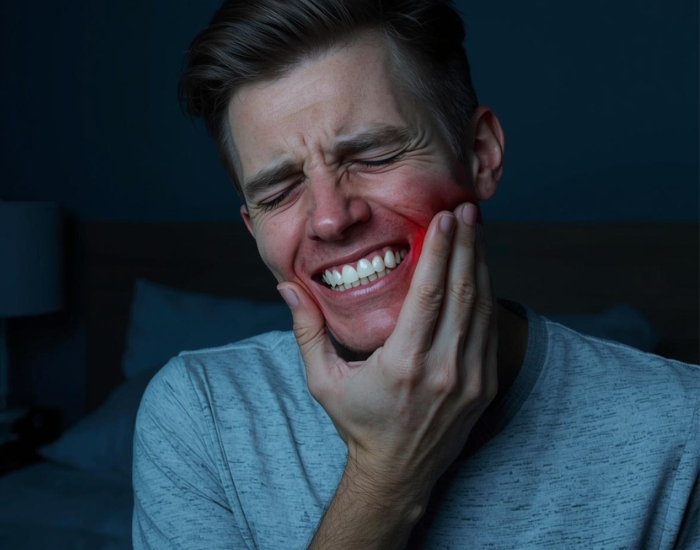
Tooth pain at night usually gets worse because lying down sends more blood toward your head, inflammation builds while you rest, saliva slows down and many people clench or grind in their sleep. Nighttime pain almost always points to a real dental problem, such as a deep cavity, an inflamed nerve, a crack or an infection, and the lasting fix is to have it diagnosed and treated.
A toothache that is manageable during the day can feel unbearable once the lights go out. It keeps you awake, makes it hard to focus the next day and leaves you wondering whether you need help right now or can wait. This guide explains why tooth pain at night feels so intense, the most common causes, safe ways to get relief until morning and the signs that mean you should be seen quickly. If you live in Katy, Cypress, Fulshear or anywhere in Greater Houston, Walk-In Dental Clinic offers same-day dental care 7 days a week, including weekends.
- Night pain feels worse because of blood flow to the head, rising inflammation, less saliva and fewer distractions.
- Common causes include deep cavities, inflamed tooth nerves, cracked teeth, gum infections, abscesses, sinus pressure and grinding.
- Ibuprofen or acetaminophen as directed, a cold compress, a salt-water rinse and raising your head can help you get through the night.
- Facial swelling, fever or trouble breathing or swallowing need urgent care, and spreading swelling needs the ER or 911.
- Walk-In Dental Clinic in Katy sees same-day and walk-in patients 7 days a week.
Why does tooth pain get worse at night?
Tooth pain gets worse at night mainly because of body position and rest. When you lie flat, more blood flows toward your head, which raises pressure around an inflamed tooth nerve or infected gum tissue. At the same time, you have fewer distractions, so your brain pays closer attention to every pain signal.
Several other factors stack on top of that. Saliva production drops during sleep, so your mouth is less able to neutralize acids and wash away bacteria. Natural inflammation tends to rise while the body rests. And many people grind or clench their teeth in their sleep without knowing it, which puts heavy pressure on teeth that are already sore.
- Increased blood flow and pressure in the head when lying down
- Fewer distractions, so pain feels more intense
- Lower saliva flow and less natural protection against acid and bacteria
- Inflammation that tends to build while the body rests
- Nighttime grinding or clenching that strains sensitive teeth
What are the most common causes of tooth pain at night?
The most common cause of tooth pain at night is tooth decay that has reached the deeper layers of the tooth. Once a cavity gets close to the nerve, it can cause sharp pain and sensitivity that often flares when you lie down. Other frequent causes are listed below, and a dentist needs to examine the tooth to tell them apart.
- Deep cavities: decay that reaches the dentin or pulp can cause sharp, lingering pain.
- Inflamed tooth nerve (pulpitis): a throbbing ache that may keep you awake and linger after hot or cold.
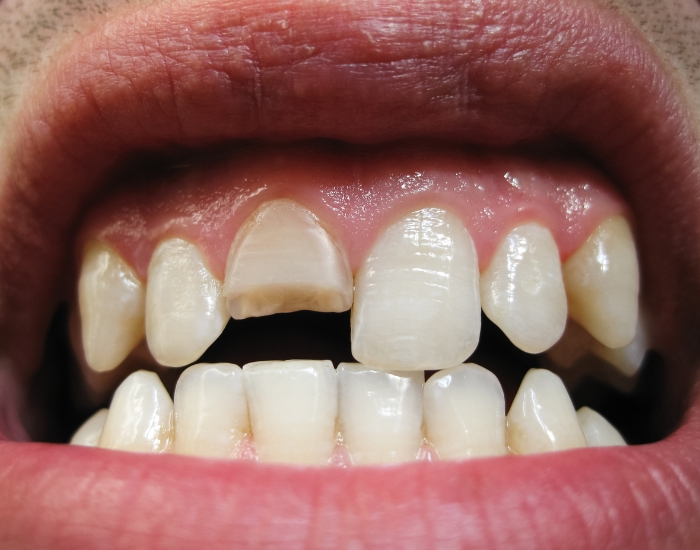
- Cracked or fractured tooth: the damage may not be visible, but pressure and temperature changes trigger pain.
- Gum disease or gum infection: inflamed gums can feel worse when you lie flat.
- Dental abscess: a pocket of infection that causes severe pain, swelling and sometimes fever.
- Sinus pressure: congestion from a cold or allergies can make upper back teeth ache at night.
- Grinding or clenching: sleep bruxism overloads teeth and jaw muscles and can cause morning soreness too.
If your pain is a steady, pulsing ache, our guide to throbbing tooth pain explains what that pattern often means. Identifying the exact cause is essential, because the right treatment for a sinus-related ache is very different from the treatment for an infected nerve.
Why does lying down make a toothache worse?
Lying down makes a toothache worse because it changes the pressure inside your head and mouth. With your head at the same level as your heart, blood flows more easily to the face and jaw, and that extra pressure presses on an already irritated nerve or infected area.
Inside a tooth, the pulp sits in a hard, closed chamber. When the pulp is inflamed, it has no room to swell, so even a small rise in pressure can feel like a big jump in pain. Sinus congestion also builds when you are flat, which is why upper back teeth sometimes ache more at bedtime during a cold or allergy season. Finally, if you grind or clench in your sleep, the force can aggravate existing dental problems and even create new pain.
Toothache keeping you up?
Call Walk-In Dental Clinic in Katy. We triage by phone and can see you the same day, 7 days a week, including weekends.
How can I relieve tooth pain at night until I see a dentist?
You can usually ease tooth pain at night with an over-the-counter pain reliever taken as directed, a cold compress on the cheek, a warm salt-water rinse and keeping your head raised. These steps calm symptoms for a few hours, but they do not treat the cause, so plan to see a dentist as soon as possible.
- 1. Take ibuprofen or acetaminophen exactly as the label directs, if they are safe for you. Ask a pharmacist if you take other medicines or have health conditions.
- 2. Hold a cold compress wrapped in a cloth against the outside of your cheek for about 15 minutes at a time to reduce swelling and numb the area.
- 3. Rinse gently with warm salt water to reduce bacteria and soothe inflamed gums.
- 4. Raise your head with an extra pillow to lower pressure around the tooth.
- 5. Avoid very hot, very cold, sugary or acidic foods and drinks before bed.
- 6. If you use clove oil, apply a small amount carefully to the area for short-term relief only.
Never place aspirin directly on the gum or tooth, because it can burn the tissue. Do not apply heat to a swollen face, since warmth can encourage an infection to spread. For more detail on getting through a bad night, read our article on severe tooth pain at night and what to do.
When is tooth pain at night a dental emergency?
Tooth pain at night is an emergency when it comes with facial or jaw swelling, fever, pus, a bad taste or pain that keeps getting worse despite pain relievers. These signs can point to an infection that needs prompt treatment, and an infection does not go away on its own.
- Swelling in the face, cheek or jaw
- Fever or feeling generally unwell
- Pus, a pimple on the gum or a bad taste that will not go away
- Pain that wakes you up repeatedly or does not respond to medicine
- A toothache that lasts more than a day or two
- A cracked, broken or loose tooth
If you have swelling without those red flags, call us. A tooth abscess or spreading gum infection should be treated the same day whenever possible. Delaying care can lead to more pain, more involved treatment and, in some cases, losing the tooth.
How do dentists treat tooth pain that gets worse at night?
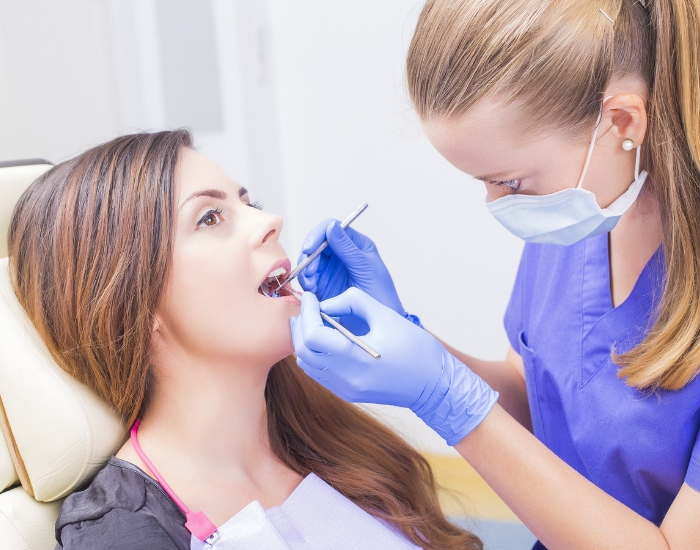
Dentists treat nighttime tooth pain by finding the source and fixing it, which usually means a filling, a root canal, treatment for a gum infection, a night guard or, if the tooth cannot be saved, an extraction. The visit starts with an exam and X-rays so the treatment matches the real cause.
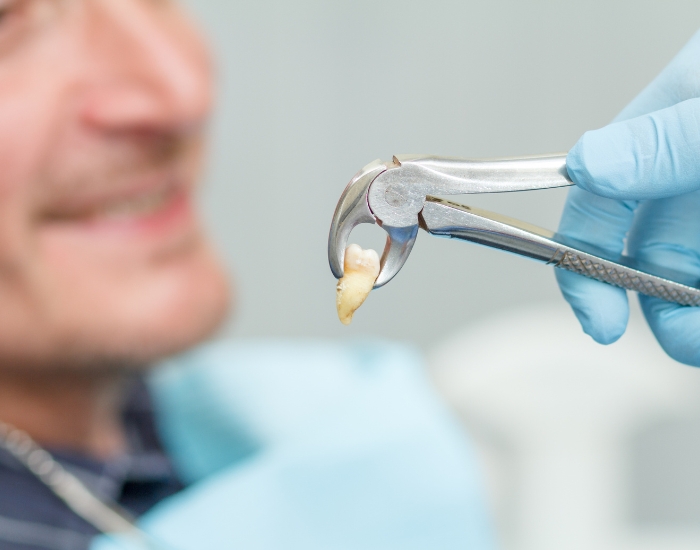
When decay or infection has reached the pulp, root canal treatment removes the damaged nerve and relieves the pressure that makes pain spike at night. For a smaller cavity, tooth-colored fillings restore the tooth. If a tooth is too damaged to repair, a tooth extraction ends the pain and stops the infection. We explain every option and the cost before treatment begins, and our payment and insurance page covers the ways you can pay.
| Likely cause | Typical treatment |
|---|---|
| Cavity that has not reached the nerve | Tooth-colored filling |
| Inflamed or infected nerve | Root canal treatment, often followed by a crown |
| Abscess | Draining the infection, root canal or extraction, and antibiotics when needed |
| Cracked tooth | Bonding, a crown or, for deep cracks, extraction |
| Grinding or clenching | A night guard and bite evaluation |
| Sinus pressure | Dental causes ruled out, then sinus care with your physician |
How can I prevent tooth pain at night?
The best way to prevent tooth pain at night is to stop small problems before they reach the nerve: brush twice a day with fluoride toothpaste, floss daily, keep regular checkups and protect your teeth if you grind. Most nighttime toothaches start as problems that could have been caught early.
- Brush twice daily and floss every day to remove plaque and bacteria.
- Skip sugary snacks and acidic drinks right before bed.
- Ask about a custom night guard if you wake with sore teeth or jaw muscles.
- Stay hydrated and manage allergies to reduce sinus pressure.
- Keep regular dental visits so cavities and cracks are found before they hurt.
- Get a sensitive tooth checked early instead of waiting for it to wake you up.
Same-Day Care Near Katy, Cypress & Fulshear
Walk-In Dental Clinic is located at 20919 Kingsland Blvd, Katy, TX 77450, just off I-10 with easy access from the Grand Parkway. We are open 7 days a week, including evenings, Saturdays and Sundays, and see same-day patients from Katy, Cinco Ranch, Fulshear, Cypress, Richmond, Sugar Land and the rest of Greater Houston. Call ahead and we can assess your symptoms by phone and be ready when you arrive.
Same-day dental care, 7 days a week
Tell us what is happening and we will get you in as soon as possible.
Frequently Asked Questions
What causes tooth pain at night when lying down?
Lying down increases blood flow and pressure in the head, which presses on an inflamed tooth nerve or infected tissue. Cavities, cracked teeth, gum infections, abscesses and grinding during sleep are the most common underlying causes. A dental exam is the only reliable way to know which one you have.
Why does my tooth hurt more at night after eating?
Food particles and acids can irritate a cavity or a sensitive area, and at night saliva flow drops so they are not washed away as quickly. Inflammation also tends to rise while you rest. Brushing and flossing before bed helps, but a tooth that reacts like this usually needs to be checked.
How can I stop tooth pain at night fast?
Take an over-the-counter pain reliever as directed, hold a cold compress on your cheek, rinse with warm salt water and sleep with your head raised. These steps can calm pain for a few hours. They do not fix the problem, so arrange to see a dentist soon.
What is the best home remedy for tooth pain at night?
Salt-water rinses and cold compresses are safe and helpful for temporary relief. Clove oil can numb the area briefly but should be used sparingly. Avoid putting aspirin on the gum and avoid heat on a swollen face.
Is tooth pain at night a sign of infection?
It can be. Throbbing pain that wakes you up, especially with swelling, a bad taste or fever, often means the nerve is inflamed or infected or an abscess has formed. Infections need professional treatment and should be seen promptly.
When should I see a dentist for tooth pain at night?
See a dentist if the pain lasts more than a day, gets worse, keeps waking you or comes with swelling or fever. If swelling makes it hard to breathe or swallow or spreads toward your eye or neck, go to the ER or call 911.
Can I walk in for tooth pain the next morning in Katy?
Yes. Walk-In Dental Clinic at 20919 Kingsland Blvd in Katy welcomes same-day and walk-in patients 7 days a week. Calling ahead at (713) 999-5328 lets us triage your symptoms and be ready when you arrive.
Can sinus pressure cause tooth pain at night?
Yes, sinus congestion can make the upper back teeth ache, and it often feels worse when you lie down. Because a deep cavity or infection can feel similar, it is wise to have a dentist rule out a dental cause first.
Final Thoughts
Tooth pain at night is your body telling you something needs attention. Home remedies can help you rest, but only treatment of the cause will stop the pain from coming back night after night. If a toothache is costing you sleep, call Walk-In Dental Clinic at (713) 999-5328 or stop by our Katy office. We are open 7 days a week, explain your options and costs up front and can often treat you the same day.
Further reading
- American Dental Association patient resource: MouthHealthy.org
- U.S. National Library of Medicine: MedlinePlus, Tooth Disorders
Medical disclaimer: This content is for informational purposes only and does not constitute medical or dental advice. Always consult a licensed dental professional about your own symptoms. In a medical emergency, call 911.