Can tooth enamel be restored? Enamel that is completely lost cannot grow back, because it contains no living cells, but enamel that is only weakened can often be remineralized with fluoride and good habits, and teeth with real enamel loss can be protected and rebuilt with bonding, crowns or veneers. The earlier erosion is caught, the more conservative the fix, so sensitivity or thinning teeth are worth a dental check.
A common concern in the dental chair sounds like this: “My teeth look more yellow than they used to. They feel sensitive. Did I permanently damage them?” That moment of uncertainty leads to a bigger question: can tooth enamel be restored, or is the damage irreversible?
Online articles offer mixed answers. Some promise natural remedies that regrow enamel; others say any enamel loss is permanent. The truth sits in between, and understanding it clearly can prevent both unnecessary worry and delayed treatment. This guide explains what enamel is, what happens when it weakens, and what can realistically be done about it.
- Enamel is the hardest substance in the body, but it has no living cells, so lost enamel does not regrow.
- Early weakening can be remineralized with fluoride, saliva and professional treatment.
- Sensitivity, yellowing, rough or see-through edges and more cavities are warning signs of erosion.
- Acidic drinks, reflux, dry mouth, grinding and hard brushing are the main causes.
- Bonding, crowns and veneers can restore teeth when enamel loss is significant.
What is tooth enamel, and why is it so important?
Tooth enamel is the hard, outer layer of each tooth that protects the softer dentin and the pulp inside from chewing forces, temperature changes and bacteria. Enamel allows your teeth to:
- Withstand everyday chewing forces
- Protect the nerves inside the tooth
- Resist hot and cold temperature changes
- Shield the tooth against bacteria and decay
Although enamel is the hardest substance in the human body, it is not indestructible. Acid exposure, grinding, aggressive brushing and diet can gradually wear it down. And unlike skin or bone, enamel contains no living cells, which is the key detail in whether it can be fully restored. When enamel thins and the dentin underneath is exposed, sensitivity is often the first sign; our article why are my teeth sensitive explains that connection.
Can tooth enamel be restored naturally?
Completely lost enamel cannot grow back naturally, but enamel in the early stages of weakening can be remineralized, which rebuilds its mineral content and strength. That distinction is critical.
- Remineralization strengthens weakened enamel by putting minerals back into it.
- Regrowth would mean new enamel forming, which the body cannot do once enamel is gone.
When enamel first softens from acid exposure, minerals such as calcium and phosphate leave the tooth surface. Fluoride, saliva and professional dental treatments help return those minerals. Early damage, often visible as chalky white spots, can frequently be stabilized and even reversed. Deeper erosion that has already removed enamel cannot be regrown, but it can be protected and restored by a dentist. That is the realistic answer to whether tooth enamel can be restored.
What are the signs that enamel is wearing down?
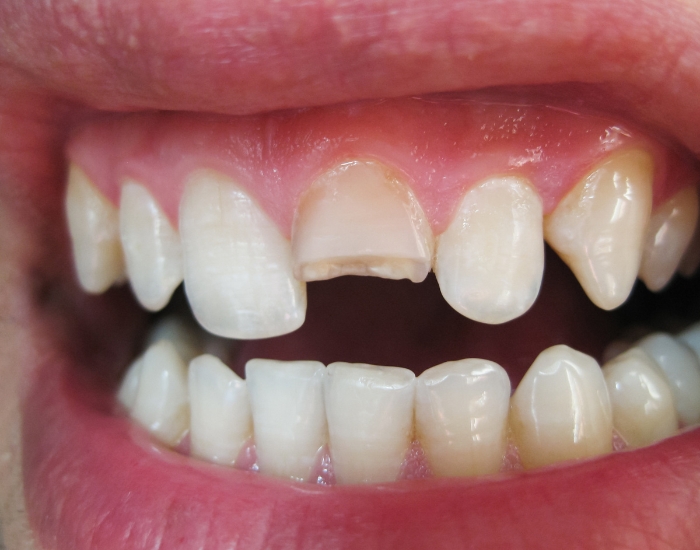
Increased sensitivity, teeth that look more yellow, rough or uneven edges, small chips, see-through edges on the front teeth and more frequent cavities are the most common signs of enamel loss. Many people do not notice erosion until symptoms appear, so watch for:
- Increased sensitivity to hot, cold or sweet foods
- Teeth appearing more yellow as the dentin shows through
- Rough, uneven or cupped edges
- Small chips or cracks
- Transparent edges on the front teeth
- Cavities forming more often than before
If you notice these signs, a dental evaluation is important. Early care increases the chance that weakened enamel can be strengthened before severe erosion develops. Sudden pain when biting may instead point to a crack; see cracked tooth pain.
What causes enamel erosion?
Enamel erosion is caused by acid, from food and drink or from the stomach, and by mechanical wear from grinding and hard brushing. Preventing further damage is as important as repairing existing weakness, so identifying the cause matters.
- Dietary acids: soda, energy and sports drinks, citrus fruits and juices, vinegar-based dressings and wine.
- Medical conditions: acid reflux, chronic vomiting, eating disorders and dry mouth all increase acid exposure or reduce the protective effect of saliva.
- Mechanical wear: teeth grinding, aggressive brushing, hard-bristled toothbrushes and nail biting physically thin the enamel.
Often more than one cause is involved, such as frequent sipping of acidic drinks combined with brushing hard right afterward. Your dentist can usually tell from the pattern of wear which factors are at play and help you address them.
Sensitive, thinning or yellowing teeth?
Walk-In Dental Clinic in Katy offers same-day visits 7 days a week. We check your enamel, explain what can be done and the cost, and help you protect your teeth.
When does enamel loss need professional attention?
See a dentist if sensitivity lasts more than a few days, chewing hurts, your teeth look thinner, white spots or rough patches appear, or you are getting cavities more often. Signs it is time for an evaluation include:
- Sensitivity that persists for more than a few days
- Pain when chewing
- Teeth that look visibly thinner or more see-through
- White spots or rough patches
- More frequent cavities
Early assessment increases the chance that remineralization alone will be enough. Delaying care can let erosion progress to structural damage that needs restorative treatment. At Walk-In Dental Clinic in Katy we offer same-day and walk-in visits 7 days a week.
Can tooth enamel be restored with dental treatments?
Yes, in practical terms: dentists cannot regrow enamel, but they can strengthen weakened enamel and replace the protective layer on damaged teeth with fluoride, bonding, crowns or veneers. The main options are:
- Professional fluoride treatments: fluoride varnish strengthens enamel, encourages remineralization, reduces sensitivity and slows further erosion, especially in early stages.
- Prescription-strength toothpaste: a high-fluoride toothpaste for home use supports ongoing remineralization.
- Dental bonding: tooth-colored resin restores shape, covers exposed dentin and improves appearance when erosion causes minor damage; see our tooth-colored fillings page.
- Dental crowns: for significant enamel loss, a crown covers and reinforces the whole tooth, restoring function and preventing further damage.
- Veneers: for erosion on the front teeth, veneers can restore appearance and add a layer of protection.
Bonding, crowns and veneers do not regenerate enamel, but they replace its protective role. That is why, even though enamel does not regrow, teeth affected by erosion can still be effectively restored. We explain which option fits your situation, and the cost, before treatment begins.
Can tooth enamel be restored at home?
Home care can help remineralize early enamel weakening and slow erosion, but it cannot rebuild enamel that has already worn away. Evidence-based home strategies include:
- Using a fluoride toothpaste twice a day
- Drinking or rinsing with water after acidic foods and drinks
- Waiting about 30 minutes before brushing after acid exposure
- Chewing sugar-free gum to stimulate saliva
- Using a soft-bristled toothbrush and a gentle technique
Be cautious with online remedies that claim to regrow enamel; many are not supported by evidence, and some, such as brushing with abrasive or acidic mixtures, can make erosion worse. Once structural damage has occurred, professional care is needed.
Who should manage enamel erosion?
Enamel erosion is a dental condition, so a licensed dentist should evaluate and treat it, working with your doctor when a medical cause such as reflux or dry mouth is involved. A dentist can:
- Evaluate how severe the erosion is
- Identify the underlying causes
- Recommend preventive strategies
- Provide restorative treatment if needed
If reflux, frequent vomiting or a medication that causes dry mouth is contributing, coordinating care between your dentist and your physician gives the best long-term result. Learn more about our general and emergency dentistry services.
How can you prevent enamel loss, and what is the long-term outlook?
Limiting acids, rinsing with water, waiting before brushing after acidic food, wearing a night guard if you grind and keeping regular exams are the best ways to protect enamel, and caught early, weakened enamel can usually be stabilized for years. Preventive strategies include:
- Limit acidic drinks, or have them with meals rather than sipping all day
- Rinse with water after meals and snacks
- Avoid brushing right after acid exposure
- Wear a night guard if you grind your teeth
- Keep regular dental exams and cleanings
When erosion is caught early, teeth can stay strong and functional for many years with proper care. If it has progressed, restorative dentistry offers natural-looking, durable solutions that preserve tooth structure and comfort. The key is timely evaluation, because waiting too long reduces the conservative options.
Same-Day Care Near Katy, Cypress & Fulshear
Walk-In Dental Clinic is located at 20919 Kingsland Blvd, Katy, TX 77450, just off I-10 with easy access from the Grand Parkway. We are open 7 days a week, including evenings, Saturdays and Sundays, and see same-day patients from Katy, Cinco Ranch, Fulshear, Cypress, Richmond, Sugar Land and the rest of Greater Houston. Call ahead and we can assess your symptoms by phone and be ready when you arrive.
Same-day dental care, 7 days a week
Tell us what is happening and we will get you in as soon as possible.
Frequently Asked Questions
Can tooth enamel be restored?
Enamel that is completely lost cannot grow back. Enamel that is only weakened can often be remineralized with fluoride and good habits, and teeth with real enamel loss can be protected with bonding, crowns or veneers.
Does enamel grow back on its own?
No. Enamel has no living cells, so the body cannot make new enamel. What it can do, with help from saliva and fluoride, is put minerals back into enamel that has started to soften.
Can remineralizing toothpaste fix enamel?
Fluoride and remineralizing toothpastes can strengthen early weak spots and reduce sensitivity. They cannot replace enamel that has already worn away, so deeper erosion still needs a dentist.
Why are my teeth turning yellow if I brush every day?
As enamel thins, more of the yellowish dentin underneath shows through. Brushing too hard or right after acidic drinks can actually speed up that wear, so use a soft brush and wait about 30 minutes after acidic food.
Is enamel erosion the same as a cavity?
Not exactly. Erosion is enamel lost to acid or wear across the tooth surface, while a cavity is a localized hole caused by bacteria. Eroded enamel does make cavities more likely, so the two often go together.
Can whitening damage enamel?
Whitening used as directed is not known to remove enamel, but it can cause temporary sensitivity, especially if enamel is already thin. Talk with your dentist before whitening if you have erosion or sensitive teeth.
Does insurance cover enamel repair?
Coverage depends on your plan and whether the treatment is preventive, restorative or cosmetic. Walk-In Dental Clinic accepts most dental insurance (exclusions apply), offers discounts and payment plans for patients without insurance and explains the cost before treatment.
Where can I get my enamel checked near Katy, Cypress or Fulshear?
Walk-In Dental Clinic at 20919 Kingsland Blvd in Katy offers same-day and walk-in visits 7 days a week, including evenings and weekends. Call (713) 999-5328 to let us know you are coming.
Final Thoughts
So, can tooth enamel be restored? Fully lost enamel cannot regrow, but early enamel damage can be remineralized, professional treatments can protect and restore affected teeth and prevention remains the most effective strategy. Understanding the difference between regrowth and remineralization removes much of the confusion, and enamel erosion does not have to mean losing teeth. If you notice sensitivity or changes in your enamel, call Walk-In Dental Clinic at (713) 999-5328 or book online. We serve patients from Katy, Cypress, Fulshear and across Greater Houston.
Further reading
- American Dental Association patient resource: MouthHealthy.org
- U.S. National Library of Medicine: MedlinePlus, Tooth Disorders
Medical disclaimer: This content is for informational purposes only and does not constitute medical or dental advice. Always consult a licensed dental professional about your own symptoms. In a medical emergency, call 911.