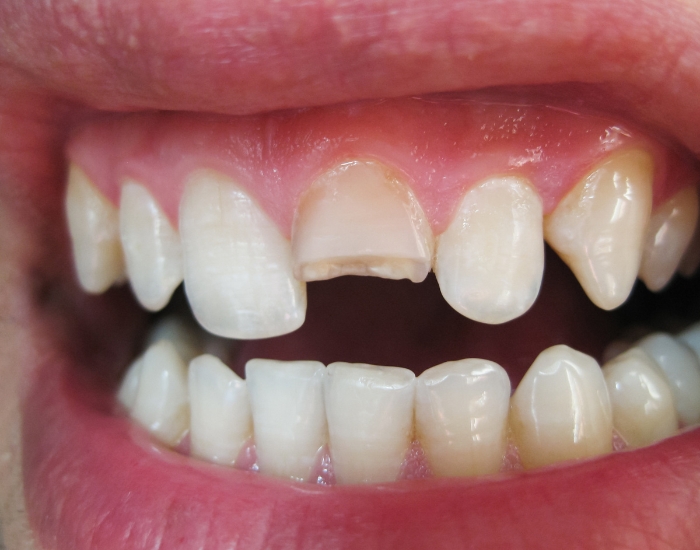
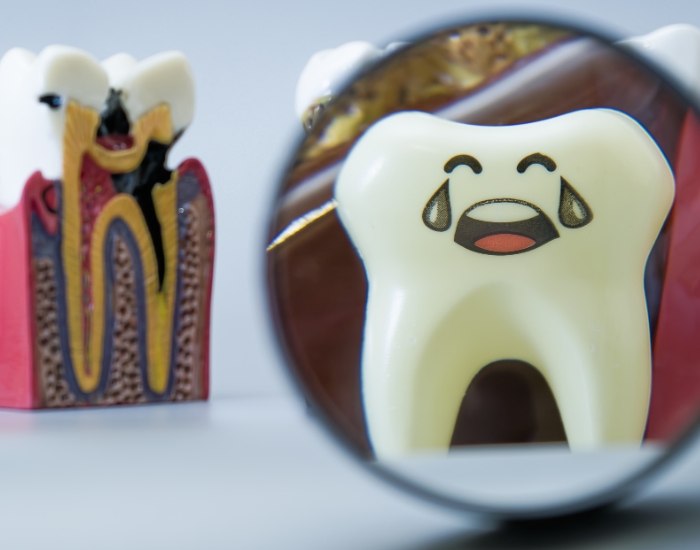
Tooth infection pain is usually a severe, throbbing ache in one tooth that gets worse when you lie down or bite, and it often spreads to the jaw, ear or head. It happens when bacteria reach the pulp inside the tooth, and it needs professional treatment such as drainage, a root canal or an extraction, because antibiotics alone cannot remove the source.
Some tooth infections begin as mild sensitivity and seem manageable at first, but they can escalate into severe pain, facial swelling and, in rare cases, a risk to your overall health. Recognizing the warning signs early and getting proper care quickly protects both the tooth and you. This guide covers what a tooth infection is, how it develops, the symptoms and pain patterns to watch for, the treatment options and the complications of waiting. Walk-In Dental Clinic in Katy sees patients with tooth infections from Katy, Cypress, Fulshear and Greater Houston the same day, 7 days a week.
- A tooth infection starts when bacteria reach the pulp through decay, a crack or an injury.
- Typical signs are throbbing pain, swelling, a bad taste, sensitivity and sometimes fever.
- Pain that suddenly fades does not mean the infection is gone; the nerve may have died.
- Treatment is drainage, a root canal or extraction, with antibiotics only as a support.
- Swelling with trouble breathing or swallowing, or spreading to the eye or neck, needs the ER or 911.
What is a tooth infection?
A tooth infection happens when bacteria get into the pulp, the soft inner part of the tooth that holds nerves and blood vessels. Once inside, the bacteria multiply and cause inflammation, pressure and pain.
Bacteria usually get in through deep decay, a crack or chip, a leaking old filling or an injury that damaged the nerve. If the infection is not treated, it can travel out through the root tip into the surrounding bone and gum and form an abscess, a pocket of pus. A tooth infection does not clear up on its own. In most cases it needs professional treatment such as a root canal or an extraction to remove the source of bacteria.
What are the symptoms of a tooth infection?
The most common tooth infection symptoms are severe or constant tooth pain, sensitivity to hot and cold, swelling around the tooth or in the face, a bad taste or bad breath, tender or swollen lymph nodes and difficulty chewing. Fever can appear in more serious cases.
- Severe, constant or throbbing pain in one tooth
- Lingering sensitivity to hot or cold foods and drinks
- Swelling of the gum, cheek, jaw or face
- A pimple-like bump on the gum that may drain pus
- A bad taste or bad breath that will not go away
- Tender, swollen lymph nodes under the jaw or in the neck
- Pain or difficulty when chewing or biting
- Fever or feeling generally unwell
Our article on the symptoms of a tooth infection explains each sign in more detail. If you have any of these, especially more than one, arrange a dental visit as soon as you can.
What does tooth infection pain feel like?
Tooth infection pain usually feels intense and pulsing, and it tends to worsen over time. It often gets worse when you lie down, spreads to the jaw, ear or side of the head and increases when you chew or press on the tooth.
Many people describe a tooth that feels taller than its neighbors or bruised when they bite. Another important pattern is a sudden jump in pain after a period of mild discomfort, which can mean the infection has reached the nerve or begun to spread. The opposite can also happen: the pain suddenly stops. That may mean the nerve has died or an abscess has drained, but the bacteria are still there, so the tooth still needs care. Infections can also cause referred pain; learn more in can a tooth infection cause a headache and our guide to jaw tooth pain.
How does a tooth infection develop?
A tooth infection develops in stages. Bacteria enter through a cavity, crack or injury, inflame the pulp, raise the pressure inside the tooth and then spread to the root tip and bone, where an abscess can form.
- 1. Entry: decay, a crack or trauma opens a path through the enamel and dentin.
- 2. Pulp inflammation: bacteria reach the nerve, which swells inside its hard chamber and causes pain.
- 3. Pulp death: the nerve can die, and pain may change or even fade for a while.
- 4. Spread to the root tip: infection moves into the bone at the end of the root.
- 5. Abscess and swelling: pus collects, and the gums or face may swell as the body fights back.
Think you have a tooth infection?
Infections do not wait, and neither should you. Walk-In Dental Clinic in Katy offers same-day care 7 days a week.
How is a tooth infection treated?
A tooth infection is treated by removing the source of bacteria. The main options are root canal treatment to clean out the infected pulp and save the tooth, extraction when the tooth cannot be saved and drainage of an abscess to relieve pressure. Antibiotics may be added when infection has spread or swelling is significant.
Root canal treatment can save the tooth and relieve the pain, usually followed by a crown. If the tooth must be removed, a tooth extraction ends the infection, and replacement options such as dental implants or a dental bridge can be discussed. Antibiotics on their own do not cure a tooth infection, because they cannot reach bacteria inside a tooth whose nerve has died. We explain your options and the cost before treatment begins.
| Treatment | When it is used | What it does |
|---|---|---|
| Root canal | The tooth is restorable | Removes infected pulp, disinfects and seals the tooth |
| Extraction | The tooth is too damaged or infection is severe | Removes the tooth and the source of infection |
| Abscess drainage | Pus has collected in the gum or bone | Relieves pressure and pain quickly |
| Antibiotics | Infection has spread or swelling is significant | Helps control spread alongside treatment |
Is a tooth abscess the same as a tooth infection?
A tooth abscess is a more advanced form of tooth infection in which pus has collected at the root tip or in the gum. Every abscess is an infection, but not every infection has formed an abscess yet.
Abscesses often cause throbbing pain, a swollen bump on the gum, a bad taste and facial swelling. They need prompt drainage and treatment of the tooth. Learn more about tooth abscess treatment and our abscess and swollen jaw care in Katy.
What complications can an untreated tooth infection cause?
An untreated tooth infection can spread to the jawbone, form an abscess, damage nearby teeth, spread into the sinuses and, in rare cases, reach the bloodstream or deep spaces of the face and neck, which can be life-threatening. This is why early treatment matters.
Even when pain improves for a while, untreated infection can cause bone loss around the tooth, loss of the tooth itself and damage to surrounding tissue. Upper back teeth sit close to the sinuses, and lower back teeth sit close to spaces under the tongue and in the neck, which is why swelling in those areas is taken so seriously. Read more about a swollen face from a tooth infection and whether tooth decay can be dangerous.
What can I do for tooth infection pain until I am seen?
Until you can be seen, take an over-the-counter pain reliever as directed, rinse with warm salt water, use a cold compress on the outside of your cheek, eat soft foods and sleep with your head raised. These steps ease symptoms but do not treat the infection.
Do not apply heat to a swollen face, do not try to pop or drain a gum bump yourself and do not use leftover antibiotics. Call a dentist the same day; Walk-In Dental Clinic offers same-day emergency dental care in Katy and can triage your symptoms by phone.
How can I prevent tooth infections?
You can prevent most tooth infections by treating cavities and cracks early, keeping up with daily brushing and flossing, limiting sugar and protecting your teeth from injury.
- Brush twice daily with fluoride toothpaste.
- Floss daily to remove plaque between teeth.
- Limit sugary foods and drinks.
- Keep regular dental checkups and cleanings.
- Treat cavities before they reach the pulp.
- Wear a mouthguard during sports.
Same-Day Care Near Katy, Cypress & Fulshear
Walk-In Dental Clinic is located at 20919 Kingsland Blvd, Katy, TX 77450, just off I-10 with easy access from the Grand Parkway. We are open 7 days a week, including evenings, Saturdays and Sundays, and see same-day patients from Katy, Cinco Ranch, Fulshear, Cypress, Richmond, Sugar Land and the rest of Greater Houston. Call ahead and we can assess your symptoms by phone and be ready when you arrive.
Same-day dental care, 7 days a week
Tell us what is happening and we will get you in as soon as possible.
Frequently Asked Questions
What are the most common tooth infection symptoms?
Common symptoms include severe or throbbing tooth pain, swelling, lingering sensitivity, a bad taste or bad breath, swollen lymph nodes and sometimes fever. Having more than one of these makes infection more likely. A dentist can confirm it with an exam and X-rays.
What are the pain signs of a tooth infection?
Infection pain is often throbbing, worse when lying down and spreads to the jaw, ear or head. The tooth may hurt when you bite or feel taller than the others. A sudden change in pain, either much worse or suddenly gone, should also be checked.
What is the best treatment for a tooth infection?
The best treatment depends on how severe the infection is and whether the tooth can be saved. Root canal treatment saves the tooth in many cases, while extraction is used when it cannot be restored. Antibiotics may be added but do not replace treatment.
Can antibiotics cure a tooth infection on their own?
No. Antibiotics can help control spreading infection, but they do not remove the bacteria living inside the tooth. Without a root canal, drainage or extraction, the infection usually returns.
What happens if an untreated tooth infection spreads?
It can spread to the jawbone, sinuses and surrounding tissues, cause tooth loss and, in rare cases, become life-threatening. Swelling with trouble breathing or swallowing, or swelling spreading to the eye or neck, needs the ER or 911.
Can a tooth infection go away by itself?
No. The pain may come and go, but the infection remains and usually gets worse over time. Professional treatment is the only way to remove it.
Can I be seen the same day for a tooth infection in Katy?
Yes. Walk-In Dental Clinic at 20919 Kingsland Blvd in Katy sees same-day and walk-in patients 7 days a week, including patients from Cypress and Fulshear. Call (713) 999-5328 so we can triage your symptoms.
Final Thoughts
Tooth infection pain is a sign of a serious condition that needs prompt dental treatment. Early diagnosis relieves pain, prevents complications and gives you the best chance of saving the tooth. If you have symptoms of a tooth infection, call Walk-In Dental Clinic at (713) 999-5328 or walk in to our Katy office. We are open 7 days a week and explain your options and costs before treatment.
Further reading
- American Dental Association patient resource: MouthHealthy.org
- U.S. National Library of Medicine: MedlinePlus, Tooth Disorders
Medical disclaimer: This content is for informational purposes only and does not constitute medical or dental advice. Always consult a licensed dental professional about your own symptoms. In a medical emergency, call 911.